
Introduction
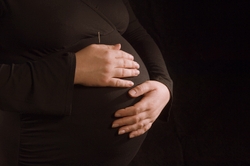 This section is intended to tell you more about receiving acupuncture in pregnancy. Many women now know that acupuncture can be very helpful for morning sickness, but it is capable of assisting in many other areas too. So please read on, and I will try to answer some of the most common questions.
Firstly, acupuncture is a safe, drug-free treatment ideally suited to pregnancy, and it is actually capable of dealing with a multitude of conditions which can arise. This is why for example, the Whittington NHS Hospital in North London set up its Maternity Acupuncture Service in 2005. The hospital finds that women who opt for acupuncture undergo fewer surgical interventions and spend less time there.
Conditions Frequently Treated
Complaints commonly treated in pregnancy include nausea and vomiting (see more on this below), fatigue, insomnia, heartburn, constipation, lower back pain, sciatica, carpal tunnel syndrome, symphysis pubis pain (also known as SPD pain), itching, anxiety and depression.
Morning sickness is a symptom which has been described by Chinese doctors in their medical texts for centuries: Zhu Dan Xi wrote on it in 1347, and The Foundations of Medicine described its causes in 1575. Whereas in western medicine there is just “morning sickness”, in acupuncture, by questioning and examination, we refine our diagnosis to one of six different kinds of morning sickness. From this follows the best choice of acupuncture points, and the most appropriate self-help advice. To see a patient’s experience of acupuncture for morning sickness, go to http://youtu.be/tbJWrMt05LU .
There are also other conditions about which women enquire. Breech presentation is one. Provided a case seems suitable, I will show women a treatment which from week 34, they can administer themselves at home. (See the research article below, entitled “Treatment of Breech Presentation”.)
Preparation for Labour
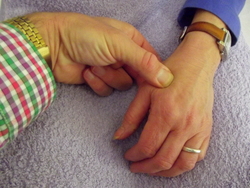
Towards the end of pregnancy, I can also teach you and your partner, some simple acupressure techniques for use from 36 weeks onwards. The application of finger or thumb pressure to specific acupuncture points can help your body prepare for labour, enhance contractions, help dilation, and assist delivery of the placenta. These are safe, comfortable techniques, which in the past have been taught by midwives at Derriford Hospital in Plymouth. As a result, partners consistently reported feeling more involved and useful in the birth.
Pre-birth treatments are something else we can do at this stage. Beginning by week 36, these are given on a weekly basis to prepare in body and mind for labour, and specifically to help prepare the cervix and pelvis.
Your Midwife
Your midwife remains at all times the person ultimately responsible for the care of you and your baby, and I always encourage women to let their midwife know they are receiving acupuncture. Sometimes I might ask you to refer specific matters to her for further advice.
How does Acupuncture Treatment Differ in Pregnancy?
Finally, does acupuncture treatment differ when it is given in pregnancy? In my own practice, there are four broad differences. I reduce the number of needles I use in each session. I devise a more gentle treatment. There exist a few acupuncture points which it is considered best practice not to use in pregnancy. Lastly, especially as pregnancy progresses, I have to pay increasing attention to patient comfort (treatment position, room temperature etc.).
I hope this has answered some of your basic questions, and as usual, you are welcome to call for further information. Below you can read the results of some of the research which has been undertaken into acupuncture in pregnancy. The trials vary in quality, but systematic reviews and randomised controlled trials are generally considered to provide the highest quality evidence. If you would like to read more about evidence quality, I would refer you to the British Acupuncture Council’s description of the evidence pyramid.
The Importance of Good Health in Pregnancy
Before finishing though, you may be interested in an ancient Chinese medical and cultural teaching known as taijiao, whereby a mother’s emotional states, diet and general wellbeing through pregnancy, have always been considered to influence the health of the baby through infancy onwards and throughout the rest of its life. Over the last 25 years, evidence has been published in respected journals such as The Lancet, to support some of what Chinese doctors have written in the previous 1500 years.
In essence, stress, depression or anxiety in pregnancy, affect the baby’s well being and can contribute to a more difficult pregnancy and labour. Two reviews published in 2007(1,2) parallel seventh century writings(3) on this by Sun Simiao. Chinese clinicians also offered pregnant women dietary advice over 1300 years ago(3). In 2013, a study was published linking even maternal weight with cardiovascular health when the baby reaches adulthood(4). So there really is much you can do to give your child the best start plus an improved chance of good health for years ahead.
(1) Journal of Child Psychology & Psychiatry, 48(3-4):245-261
(2) Journal of Maternal-Fetal & Neonatal Medicine, 20(3):189-209
(3) Bei Ji Qian Jin Yao Fang, Vol 2
(4) British Medical Journal, 347:f4539