
 There is good evidence that acupuncture helps back pain, and that the effects can last a year. In this short article, I outline how I approach this condition. People can come along with pain in any area of the back, but I shall write with a special emphasis on lower back pain, since it is the most common category.
The American College of Physicians wrote some years ago into its 2017 guidelines, the recommendation of acupuncture as a first-line treatment for lower back pain, finding it more effective for pain relief than medication. The German state healthcare system, has provided acupuncture for back pain since 2006. In 2013, Arthritis Research UK reported on the evidence for the effectiveness of twenty-five complementary therapies for musculoskeletal pain. Acupuncture scored highly for treating lower back pain. In 2015, a meta-analysis comparing 21 different therapies for sciatica, rated acupuncture as the second-best therapy in terms of pain intensity and overall effect.
The first differentiation is whether your pain is chronic or acute. Chronic means you have had it for upwards of a few weeks, whilst acute means it only started in recent days. To give you an idea, patients presenting with chronic back pain, will typically have had it for six months or more. Those with acute pain have most usually injured themselves in the past 72 hours, and can recall how it happened.
Chronic Pain

Chronic pain always involves quite a bit of delving. To formulate a diagnosis, I am interested in such questions as: when the problem began (eg pregnancy, a fall, gradual onset), its history (eg is the pain constant or episodic, has it changed over time, what treatments have you tried), the nature and location of the pain (eg dull ache, sharper stabs), any accompanying symptoms (eg early morning stiffness, difficulty putting on socks, pains down the legs / sciatica), any weather or seasonal variations (eg worse for cold/damp, better in summer), any relevant occupational factors (eg lots of sitting, driving, bending, lifting), and any aggravating factors (eg tiredness, stress, standing too long, gardening, DIY).
We will go on to cover your health and wellbeing in a wider sense, to see whether there is anything else I might connect with your back pain. I will also examine your back and range of movement. I normally offer treatment for chronic back pain, weekly for a set period, after which we will review progress. Lifestyle advice and exercises are likely to be an important component of your treatment.
Acute Pain
Acute cases are usually simpler, and two or three treatments in the first 10 to 14 days, can often be sufficient. If your injury, back examination or on-going occupational factors suggest it would be useful, then I might offer some follow-up treatment to reduce the likelihood of a recurrence.
Elsewhere on my website you will find more general information on what to expect from your first consultation, but I hope this has told you more about acupuncture for back pain and sciatica in particular.
Below you can read the results of some of the research which has been undertaken into acupuncture for back pain and sciatica. The trials vary in quality, but systematic reviews and randomised controlled trials are generally considered to provide the highest quality evidence. If you would like to read more about evidence quality, I would refer you to the British Acupuncture Council’s description of the evidence pyramid.

 American researchers studying acupuncture for back pain in the emergency department, say it shows promise as an alternative to pharmacological intervention. They studied 52 adults presenting at Brooke Army Medical Center, Texas with back pain as their primary problem. At the discretion of their responsible clinician, patients were given either acupuncture (in a style known as battlefield acupuncture), or standard drug therapy as a control.
  Australian and Chinese authors of a systematic review have concluded acupuncture is effective for treating vertebral compression fractures associated with osteoporosis. The teams, from the Universities of Tasmania and Chengdu, included 14 randomised controlled trials involving 1130 patients in their meta-analysis.
 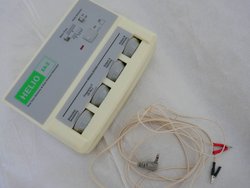 Korean researchers studying the use of electro-acupuncture for back pain after surgery, have concluded that its use in addition to usual care, is more effective than usual care alone. A total of 108 participants with non-acute, post-surgical lower back pain, were randomised to receive either usual care alone, or usual care plus electro-acupuncture (EA). The latter was given twice a week for four weeks.