
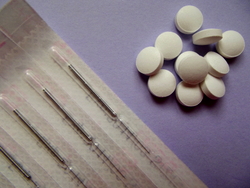
Acupuncture for migraine prevention is superior to the drug topiramate (Topamax), according to the results of a trial conducted in Taiwan.
A total of 66 patients with chronic migraine, were randomly divided into two groups: the acupuncture group received 24 acupuncture treatments over a period of 12 weeks, whilst the topiramate group received up to 100mg per day over the same period in increasing dose steps as per usual practice. The acupuncture group experienced a significantly larger decrease in mean days per month with moderate to severe headache (20.2 to 9.8 days), compared with the drug group (19.8 to 12.0). Even more importantly for many patients, adverse events were reported for 66% of the drug group, compared to only 6% of the acupuncture group. Secondary efficacy variables also favoured acupuncture, even in patients who were overusing their acute medication. The authors conclude acupuncture should be made available as a treatment option to all chronic migraine patients.
(Acupuncture versus Topiramate in Chronic Migraine Prophylaxis: A Randomised Clinical Trial. Cephalalgia, 21 October 2011.)
