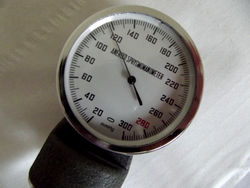
 This trial investigated the effects of acupuncture for high blood pressure, and in particular as an add-on to conventional hypertension management eg. medication and lifestyle measures. Forty-one volunteers were allocated randomly to receive either acupuncture or sham acupuncture; the latter is where the patient is touched in a way that leads them to believe a needle has been inserted, when it has in fact not. Those patients already on medication, continued to take it. After eight weeks, the sham group showed no significant change in blood pressure, whereas the acupuncture group showed a significant decrease, from an average 136.8/83.7 to 122.1/76.8 mmHg.
(Acupuncture, a promising adjunctive therapy for essential hypertension: a double-blind, randomized, controlled trial. Neurol Res 2007;29 Suppl 1.)
Author: Robin Costello
I offer traditional Chinese acupuncture in Exeter, from a tranquil clinic a mile from the city centre, and next to the University of Exeter. I graduated originally from the London School of Acupuncture and Traditional Chinese Medicine’s 3 year full time Acupuncture Diploma (DipAc) course. I am on the practitioners register of the British Acupuncture Council (MBAcC), a regulatory and professional body with an entry standard of a full three year undergraduate degree level training.
I have worked in a hospital in south west China, deepening my knowledge and using acupuncture and Chinese massage (tuina) as the treatment of choice in its country of origin. I have taught Chinese medicine in colleges, the NHS and at university level. I also practise Qi Gong, and Chinese dietary therapy, that is the medicinal use of ordinary foods, chosen to help achieve particular therapeutic effects in different individuals.
View all posts by Robin Costello

