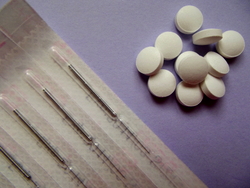
American researchers have completed a pilot study suggesting that acupuncture may be a useful adjunct to drug treatment in patients with depression, who are not responding to anti-depressant drugs alone.
Thirty patients (47% female and average age 48) with major depressive disorder, and partial or non-response to drug treatment after eight or more weeks, were given acupuncture for eight weeks, on either a weekly or twice-weekly basis. Twenty patients completed the study, and depression scores in both groups decreased significantly (18.5 to 11.5 on average). Response rates (defined as an improvement of 50% or more in depression score) were 47%. The authors concluded that acupuncture was safe, well-tolerated and effective, and may be useful in out-patient settings.
(A Pilot Study of Acupuncture Augmentation Therapy in Anti-Depressant Partial & Non-Responders with Major Depressive Disorder. Journal of Affect Disorders, April 2011.)
Author: Robin Costello
I offer traditional Chinese acupuncture in Exeter, from a tranquil clinic a mile from the city centre, and next to the University of Exeter. I graduated originally from the London School of Acupuncture and Traditional Chinese Medicine’s 3 year full time Acupuncture Diploma (DipAc) course. I am on the practitioners register of the British Acupuncture Council (MBAcC), a regulatory and professional body with an entry standard of a full three year undergraduate degree level training.
I have worked in a hospital in south west China, deepening my knowledge and using acupuncture and Chinese massage (tuina) as the treatment of choice in its country of origin. I have taught Chinese medicine in colleges, the NHS and at university level. I also practise Qi Gong, and Chinese dietary therapy, that is the medicinal use of ordinary foods, chosen to help achieve particular therapeutic effects in different individuals.
View all posts by Robin Costello

