
A systematic review and network meta-analysis undertaken by researchers at the University of Huddersfield, has compared the effectiveness of various treatments for sciatica. The conclusion is that acupuncture is effective for sciatica. The work was funded by the National Institute for Health Research.
A total of 122 relevant studies, of which 90 were randomised controlled trials, covering 21 different treatment strategies were examined. Taking overall recovery as the main outcome criterion, and compared with inactive control or conventional care, there was found to be statistically significant improvement following acupuncture, disc surgery, epidural injections, non-opioid analgesia and manipulation.
(Comparative clinical effectiveness of management strategies for sciatica: systematic review and network meta-analyses. Spine Journal, October 2013.)
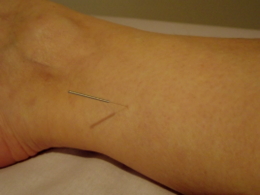
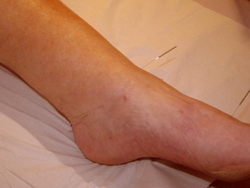 Researchers at Peninsula College of Medicine and Dentistry in Plymouth, undertaking a systematic review of studies conducted on the effectiveness of acupuncture for heel pain, have concluded that acupuncture is as effective as conventional treatments such as stretching or steroid injections. They looked at five randomised controlled trials and three non-randomised comparative studies. There were significant benefits from acupuncture treatment, and the review authors conclude that acupuncture should be considered in the recommendations for management of plantar heel pain. Future research should acknowledge the complexity of both plantar heel pain and acupuncture as an intervention, and the relationship between the two.
 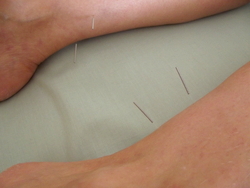 Researchers in Greece have shown that acupuncture can make a significant contribution to the treatment of heel pain in patients with plantar fasciitis. Thirty-eight male patients were randomly allocated among two groups: the first received ice, anti-inflammatory drugs, and a stretching and strengthening programme; the second received all of the foregoing, plus acupuncture. After two months, pain levels, mobility and function were all significantly better in the acupuncture group compared to the first group. The authors conclude that acupuncture should be considered a major therapeutic instrument, used alongside standard care, in the treatment of plantar fasciitis.