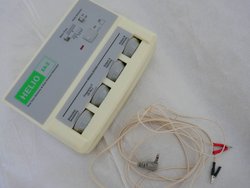
 Korean researchers studying the use of electro-acupuncture for back pain after surgery, have concluded that its use in addition to usual care, is more effective than usual care alone. A total of 108 participants with non-acute, post-surgical lower back pain, were randomised to receive either usual care alone, or usual care plus electro-acupuncture (EA). The latter was given twice a week for four weeks.
After four weeks, significant differences emerged between the groups, with greater pain reduction and functional improvement in the EA group. The researchers conclude that EA added to usual care, may be considered an effective, conservative treatment for patients with non-acute lower back pain after back surgery.
(Multicentre randomised controlled clinical trial of electroacupuncture with usual care for patients with non-acute pain after back surgery. British Journal of Anaesthesia, March 2021.)
Author: Robin Costello
I offer traditional Chinese acupuncture in Exeter, from a tranquil clinic a mile from the city centre, and next to the University of Exeter. I graduated originally from the London School of Acupuncture and Traditional Chinese Medicine’s 3 year full time Acupuncture Diploma (DipAc) course. I am on the practitioners register of the British Acupuncture Council (MBAcC), a regulatory and professional body with an entry standard of a full three year undergraduate degree level training.
I have worked in a hospital in south west China, deepening my knowledge and using acupuncture and Chinese massage (tuina) as the treatment of choice in its country of origin. I have taught Chinese medicine in colleges, the NHS and at university level. I also practise Qi Gong, and Chinese dietary therapy, that is the medicinal use of ordinary foods, chosen to help achieve particular therapeutic effects in different individuals.
View all posts by Robin Costello

