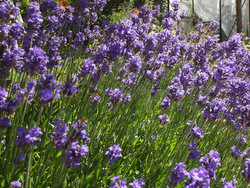
 Lavender has often been used as a calming agent for anxiety, and to help with the onset of sleep. By studying mice, a team at Kagoshima University, Japan, has now confirmed the identity of the relevant component of lavender oil and its mechanism of action. The anxiolytic (ie anxiety-reducing) chemical is one of the terpene alcohols in lavender, called linalool. Moreover, the researchers established for the first time that linalool must be smelt in order to produce its calming effect, as opposed to being absorbed in the lungs or taken up by the bloodstream.
The team say their findings may lead to the clinical application of linalool odour for anxiety disorders and to alleviate preoperative stress.
(Linalool Odor-Induced Anxiolytic Effects in Mice. Frontiers in Behavioral Neuroscience, 23 October 2018.)
Author: Robin Costello
I offer traditional Chinese acupuncture in Exeter, from a tranquil clinic a mile from the city centre, and next to the University of Exeter. I graduated originally from the London School of Acupuncture and Traditional Chinese Medicine’s 3 year full time Acupuncture Diploma (DipAc) course. I am on the practitioners register of the British Acupuncture Council (MBAcC), a regulatory and professional body with an entry standard of a full three year undergraduate degree level training.
I have worked in a hospital in south west China, deepening my knowledge and using acupuncture and Chinese massage (tuina) as the treatment of choice in its country of origin. I have taught Chinese medicine in colleges, the NHS and at university level. I also practise Qi Gong, and Chinese dietary therapy, that is the medicinal use of ordinary foods, chosen to help achieve particular therapeutic effects in different individuals.
View all posts by Robin Costello

