
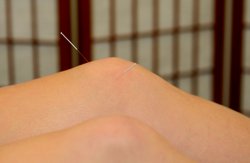
 A large American trial has shown that acupuncture can help postmenopausal women with breast cancer, who experience joint pain (arthralgia) as a side-effect of taking aromatase inhibitor drugs eg anastrozole/arimidex. Researchers randomised 226 such women, mean age 61, across 11 academic centres and clinics, to either true acupuncture, sham acupuncture or a waiting list control. Real or sham acupuncture was given twice a week for 6 weeks, then once a week for a further 6 weeks. All patients were followed up for a further 12 weeks.
Compared with the sham acupuncture and waiting list groups, the true acupuncture group at 6 weeks experienced a statistically significant reduction in their worst joint pain: 58% had at least a two-point pain reduction, compared with 33% in the sham group and 31% in the waiting list group. There were also improvements in average pain and joint stiffness in the true acupuncture group. Even at six month follow-up, average worst pain in the true acupuncture group was lower than in the other two groups.
(Effect of Acupuncture vs Sham Acupuncture or Waitlist Control on Joint Pain Related to Aromatase Inhibitors Among Women With Early-Stage Breast Cancer: A Randomized Clinical Trial. Journal of the American Medical Association, 10 July 2018.)
