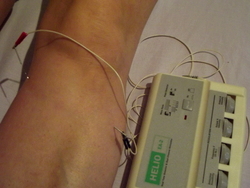
 Researchers have found that treatment of knee osteoarthritis with electro-acupuncture, produces not only improvements in patients’ perceived levels of pain, but also changes in biochemical markers associated with stress and pain.
Forty patients aged 40 years and over, were given either ten daily electro-acupuncture treatments, or just sham acupuncture over the same period. Following real electro-acupuncture and compared with the sham group, patients reported significant improvements in pain, stiffness and disability, but this was accompanied by a significant rise in plasma beta-endorphin, and a significant fall in plasma cortisol. The team conclude that acupuncture is associated with physiological changes beyond those of the placebo effect.
(Clinical and Endocrinological Changes after Electro-Acupuncture Treatment in Patients with Osteoarthritis of the Knee. Pain, December 2009.)
Author: Robin Costello
I offer traditional Chinese acupuncture in Exeter, from a tranquil clinic a mile from the city centre, and next to the University of Exeter. I graduated originally from the London School of Acupuncture and Traditional Chinese Medicine’s 3 year full time Acupuncture Diploma (DipAc) course. I am on the practitioners register of the British Acupuncture Council (MBAcC), a regulatory and professional body with an entry standard of a full three year undergraduate degree level training.
I have worked in a hospital in south west China, deepening my knowledge and using acupuncture and Chinese massage (tuina) as the treatment of choice in its country of origin. I have taught Chinese medicine in colleges, the NHS and at university level. I also practise Qi Gong, and Chinese dietary therapy, that is the medicinal use of ordinary foods, chosen to help achieve particular therapeutic effects in different individuals.
View all posts by Robin Costello

