
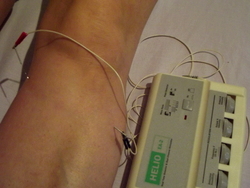
Brazilian researchers have carried out a pilot study which shows that electroacupuncture can improve the quality of life for patients with relapsing-remitting multiple sclerosis. Thirty-one patients with the condition who were undergoing treatment with immunomodulator drugs, were randomly assigned to receive either electroacupuncture or sham electroacupuncture. Sessions were weekly for thirty minutes, for a period of six months, and delivered in the MS outpatient department of a university hospital by an experienced acupuncturist with more than ten years in practice.
Compared with the sham control group, the true electroacupuncture group reported enhancements in various quality of life measures, including significant reductions in pain and depression scores, improved sleep and appetite, reduced incontinence and constipation, and disappearance of leg spasms. The researchers conclude that their work provides evidence that electroacupuncture can significantly improve various aspects of the quality of life of MS patients, especially pain.
(Impact of Electroacupuncture on Quality of Life for Patients with Relapsing-Remitting Multiple Sclerosis Under Treatment with Immunomodulators: A Randomised Study. BMC Complementary & Altern Medicine, November 2012.)
