
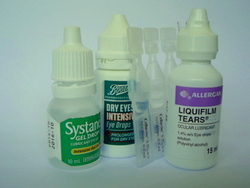
Acupuncture has been found to offer objectively measurable improvements in tear film quantity in patients with certain types of dry eye. A total of 108 such patients were randomised to receive either acupuncture or artificial tears. Both groups were divided into three subgroups based on their type of dry eye: lipid tear deficiency, Sjogren dry eye and non-Sjogren dry eye. Acupuncture was given three times per week for four weeks. Artificial tears were permitted four times per day in both eyes, for four weeks.
After four weeks of treatment, compared to baseline measurements and control groups, tear film quantity had increased significantly in the acupuncture group for lipid tear deficiency and non-Sjogren dry eye, but not for the Sjogren dry eye group. Where the latter group is concerned, the authors speculate that the treatment period may have been too short, and that given the chronic degeneration of specialised cells which occurs in Sjogrens, a more complex approach to treatment may be necessary.
(Fourier-domain optical coherence tomography for monitoring the lower tear meniscus in dry eye after acupuncture treatment. Evidence-Based Complementary & Alternative Medicine, 2015.)
