
 Japanese university researchers have shown that acupuncture improves work performance when companies are prepared to spend money on treatment to benefit employees’ health problems. In a four week multi-centre trial, 203 participants, median age 46, who were aware that their performance was impaired by health concerns, were randomly assigned to one of two groups. The intervention group was provided with financial support to enable them to receive acupuncture, whilst the control group just followed workplace-recommended measures to address their impaired effectiveness.
In the intervention group, the most common issues were neck disorders, back disorders, followed by depression, anxiety and irritability. On average, participants received one therapy session during the four week observation period.
At the end of the trial, there was a statistically significant improvement in job performance by the intervention group compared with the control group. This improved performance was equivalent to a cost saving for the company of £76 per worker per month.
(Managing office worker presenteeism by providing financial aid for acupuncture therapy: a pragmatic multicenter randomized comparative study. Industrial Health, May 2023.)
 Research from Taipei Medical University in Taiwan shows that auricular (ear) acupuncture can improve dry mouth symptoms in older adults. A total of 75 such adults were randomised to receive eight weeks of either true ear acupuncture or sham ear acupuncture. After eight weeks of treatment, the true acupuncture group reported significantly improved dry mouth, ease of speaking, swallowing, amount of saliva, dry throat and thirst, compared with the control group. They also demonstrated higher objective saliva flow than the control group.
 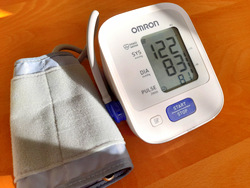 Hospital and university researchers in Taiwan have found that acupuncture treatment of high blood pressure in the elderly, alongside usual medication, delivers a host of other benefits. Seventy patients aged 65 and above, with hypertension and impaired mobility, receiving home care, were randomly allocated to have either standard antihypertensive drugs, or acupuncture alongside standard drugs. Acupuncture was given twice a week for 12 consecutive weeks. Patients were taking between one and three antihypertensive drugs.
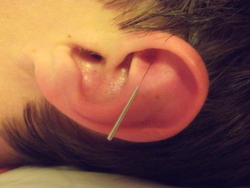 Researchers at the University of Alfenas Nursing School in Brazil, have found that ear acupuncture helps diabetic foot, as measured by improved vascular parameters after a course of treatment. A total of 44 patients with type 2 diabetes were randomly assigned to receive either five sessions of auricular (ear) acupuncture, or to a no-treatment control group.