

Australian researchers have found that acupuncture may help allergic rhinitis by modulating the body’s immune response to house dust mites. They randomised 151 individuals with persistent allergic rhinitis, to receive real, sham or no acupuncture. The intervention groups had sessions twice-weekly for eight weeks. Various cytokines, pro-inflammatory neuropeptides and immunoglobulins were measured in saliva or plasma from baseline to follow-up at four weeks.
Statistically-significant reductions in total IgE and allergen-specific IgE for house dust mite, were observed only in the real acupuncture group. Nasal obstruction, nasal itch, sneezing, runny nose, eye itch and sleep all improved significantly in the real acupuncture group, and continued to improve up to the follow-up at four weeks. The authors report that the results suggest modulation of expression, sensitivity and/or activation of a cellular receptor which plays a central role in our allergic inflammatory response. They conclude that acupuncture is a safe and effective treatment modality for patients with allergic rhinitis.
(Effect of acupuncture on house dust mite specific IgE, substance P, and symptoms in persistent allergic rhinitis. Annals of Allergy Asthma & Immunology, June 2016.)
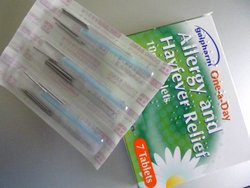


 The newest guidelines issued in the US to help doctors diagnose and treat allergic rhinitis, say that acupuncture can be suggested to patients who would rather avoid drug treatment. The guidelines, issued by the Academy of Otolaryngology, are timely given that 1 in 6 Americans now suffer from some form of nasal allergy, from hayfever to pet allergy. “What we’re really talking about are allergies that are found all year-round and in every environment, whether urban or rural,” says guideline assistant chair Dr. Sandra Lin, an associate professor in the department of otolaryngology-head and neck surgery at Johns Hopkins School of Medicine in Baltimore.