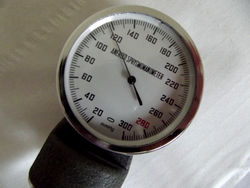
American researchers who have spent twenty years investigating the mechanisms behind acupuncture’s ability to regulate blood pressure, have now summarised their work in a review paper detailing four specific fundamental findings. They conclude acupuncture has potential to regulate cardiovascular function in patients with conditions such as hypertension, because repetitive treatment can, through a molecular mechanism, cause prolonged cardiovascular changes, far outlasting the duration of needle stimulation. Their work identifies nerve pathways through which acupuncture modifies blood pressure by reducing activity in the brain stem, in turn affecting the autonomic nervous system.
(Acupuncture regulation of blood pressure: two decades of research. International Review of Neurobiology, 2013.)
Author: Robin Costello
I offer traditional Chinese acupuncture in Exeter, from a tranquil clinic a mile from the city centre, and next to the University of Exeter. I graduated originally from the London School of Acupuncture and Traditional Chinese Medicine’s 3 year full time Acupuncture Diploma (DipAc) course. I am on the practitioners register of the British Acupuncture Council (MBAcC), a regulatory and professional body with an entry standard of a full three year undergraduate degree level training.
I have worked in a hospital in south west China, deepening my knowledge and using acupuncture and Chinese massage (tuina) as the treatment of choice in its country of origin. I have taught Chinese medicine in colleges, the NHS and at university level. I also practise Qi Gong, and Chinese dietary therapy, that is the medicinal use of ordinary foods, chosen to help achieve particular therapeutic effects in different individuals.
View all posts by Robin Costello

