
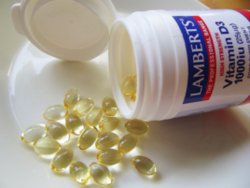
A meta-analysis of 25 double-blind, randomised, controlled trials covering 11 000 participants, has concluded that vitamin D supplementation is both safe and can help provide protection against acute respiratory tract infections.
Participants ranged in age up to 95, and data on a host of factors was assessed, including incidence of infections, their requirement for antibiotics, and number of days off school or work. Trials had taken place in 14 countries across 4 continents. Protective effects were strongest in those who already had profound vitamin D deficiency at baseline.
There were no serious adverse events associated with taking vitamin D. Concerns normally centre around raised blood calcium levels and kidney stones; these were no higher in the vitamin D groups compared to the control groups.
The researchers say their results add to the body of evidence supporting the introduction of public health measures such as food fortification, to improve vitamin D status, particularly in settings where profound vitamin D deficiency is common.
Public Health England recommended in 2016 that everyone needs vitamin D equivalent to an average daily intake of 10 micrograms, although this is intended to protect bone and muscle health.
(Vitamin D supplementation to prevent acute respiratory tract infections: systematic review and meta-analysis of individual participant data. British Medical Journal, online 15 February 2017.)
