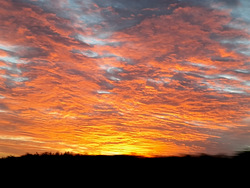
 Research by the University of Exeter suggests that some fleeting natural phenomena can affect our perceptions of landscape beauty, and more importantly, stimulate awe.
This is significant because research elsewhere has shown how awe is associated with reduced stress, improvements in wellbeing, improved memory and more innovative thinking. Work at the University of Toronto has even found an association between awe and reduced markers of inflammation in the body. The University of California showed in 2020 how cultivating awe can boost positive emotions.
Over 2500 UK-based participants were invited to take part in an online survey, in which they assessed two contrasting landscapes, one urban and one rural. Both types of landscape were designed to be broadly favourable, with features such as water which research shows as being preferred in a landscape scene. This was to try to avoid bias against an image of an unattractive built environment. Fleeting natural phenomena, including a sunset, sunrise and a rainbow, were then superimposed on the scenes for the participants to assess against eight criteria, including beauty and awe.
With regard to awe, the rural scene was considered significantly more awe-inspiring than the urban scene, but sunset, sunrise and a rainbow enhanced ratings of awe significantly. When asked, there was even a greater willingness to pay to visit such landscapes at the right time of day to witness these phenomena.
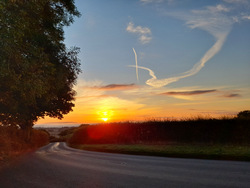 The researchers say “By highlighting opportunities to experience events such as sunrise or sunset, those in both urban and natural settings could experience a small yet significant increase in this hard-to-elicit emotion. Accompanying rises in awe’s associated benefits, such as increased positive affect and higher levels of altruism (Piff et al., 2015; Sturm et al., 2020), may then follow suit. These outcomes might be particularly beneficial for ‘green prescriptions’ that seek to improve participant wellbeing (Robinson & Breed, 2019).” Further, with implications for the planning of our city scapes, “Moreover, by preserving open skies with eastern or western aspects, planning policies might seek to maximize people’s chances of viewing fleeting phenomena.”
So although you might feel some of this research just frames in measurable and scientific terms what we intuitively suspect to be true, it is a reminder not to hurry past the window in a rush when there is a wonderful sunrise just outside waiting to be viewed. The sight of it could be beneficial for your health.
(Beyond blue-sky thinking: Diurnal patterns and ephemeral meteorological phenomena impact appraisals of beauty, awe, and value in urban and natural landscapes. Journal of Environmental Psychology, March 2023.)

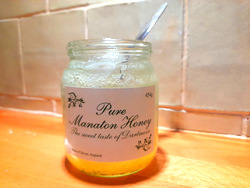 University-based authors in Malaysia have concluded that honey enhances cognition and memory, following a review of 34 studies on honey consumption, and the physical and/or psychological health of the brain. The studies, selected from an initial 330, were a combination of human and animal studies. Beneficial effects were reported in human subjects for mild cognitive impairment, dementia prevention and short-term memory.
 Researchers at the University of North Carolina have presented a study at July’s American Society for Nutrition conference, suggesting that a particular probiotic may help mild cognitive impairment, and cognitive performance more generally.
 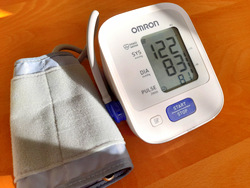 Researchers at Canterbury Christ Church University in Kent, have concluded that isometric exercises like planks are best for lowering blood pressure. They performed a meta-analysis of 270 randomised controlled trials, involving nearly 16 000 people, and compared the effects of various forms of exercise on blood pressure.
 A study in Germany suggests that left to their own devices, people need more sleep in winter, and experience more REM (rapid eye movement) sleep. A team at the Charité Medical University of Berlin recruited 292 patients who had undergone hospital sleep studies. Such studies are regularly carried out on patients who experience sleep-related difficulties. They make use of a laboratory where patients are asked to sleep naturally without an alarm clock. The length, quality and type of sleep can then be monitored. Although sleep disorders in this population could potentially affect the results, this method of recruitment offered a large cohort, evenly spread throughout the year, allowing for the investigation of month-to-month differences.