
 Italian researchers have shown that a course of acupuncture for severe fibromyalgia, is effective for treating multiple mental and physical symptoms. In the study, 102 patients with chronic, treatment-resistant fibromyalgia, and attending as out-patients of a rheumatology clinic in Ancona, received eight acupuncture sessions on a weekly basis. All participants were allowed to continue drug therapy.
After the eight weeks, patients experienced significant improvements in all evaluated parameters, including fibromyalgia impact, neuropathic pain, pain catastrophising and global health. The researchers say that for the first time, acupuncture has been shown to be effective against disease features such as pain catastrophizing and neuropathic pain. Earlier intervention with multimodal strategies, including acupuncture, could be of great benefit to patients.
(Acupuncture for Fibromyalgia: An Open-Label Pragmatic Study on Effects on Disease Severity, Neuropathic Pain Features, and Pain Catastrophizing. Evidence-Based Complementary & Alternative Medicine, 25 February 2020.)
 Spanish researchers have found that acupuncture helps fibromyalgia, specifically balance and posture in female patients. A total of 135 participants were randomised by a team at the University of Extremadura to one of three groups: a core stability physiotherapy group; an acupuncture treatment group; a no-treatment control group. Treatment groups received two sessions per week, for a total of 10 sessions.
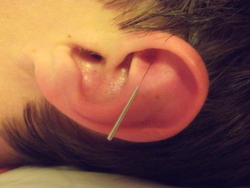 A study by the US military shows ear acupuncture can significantly reduce pain after shoulder surgery. Prior to surgery, 40 military veterans aged 17 to 55, were randomised to receive either standard care (physiotherapy) or standard care plus ear acupuncture. Between baseline and seven days, the acupuncture group exhibited significantly greater reductions in pain scores, even though analgesic use was similar across both groups.
  Researchers in Turkey studying acupuncture for fibromyalgia, have found that it may provide better subjective clinical outcomes, plus long-term objective improvements in levels of pain neuromediators. A total of 75 women with the condition were randomised to receive either true acupuncture, sham acupuncture or simulated acupuncture. Treatments were given twice a week for four weeks.