
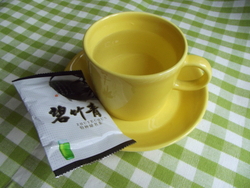
Green Tea protects against Functional Disability

Green tea is good for you: for best results, use water at only 75 degC, and try leaving the bag for only two minutes.

A large prospective cohort study carried out in Japan, has shown that consumption of green tea is associated with a significantly lower risk of the elderly developing functional disability problems ie impairments in the ability to carry out daily activities such as washing and dressing.

Data on green tea consumption and other lifestyle factors was collected in 2006 from 14 000 people aged 65 and over, and subjects were then followed up for three years, with information on developing disability collected from the public long-term care insurance database. The results showed that the more green tea people drank, the lower their risk of developing functional disability. In those who consumed less than one cup of green tea each day, 13% developed some functional disability, whereas in those consuming five cups or more, the corresponding figure was 7%.

(Green Tea Consumption and the Risk of Incident Functional Disability in Elderly Japanese: The Ohsaki Cohort 2006 Study. American Journal of Clinical Nutrition, March 2012.)

Author: Robin Costello

I offer traditional Chinese acupuncture in Exeter, from a tranquil clinic a mile from the city centre, and next to the University of Exeter. I graduated originally from the London School of Acupuncture and Traditional Chinese Medicine’s 3 year full time Acupuncture Diploma (DipAc) course. I am on the practitioners register of the British Acupuncture Council (MBAcC), a regulatory and professional body with an entry standard of a full three year undergraduate degree level training. I have worked in a hospital in south west China, deepening my knowledge and using acupuncture and Chinese massage (tuina) as the treatment of choice in its country of origin. I have taught Chinese medicine in colleges, the NHS and at university level. I also practise Qi Gong, and Chinese dietary therapy, that is the medicinal use of ordinary foods, chosen to help achieve particular therapeutic effects in different individuals.