
Electroacupuncture helps High Blood Pressure

Electroacupuncture can help high blood pressure.
In the US, nearly a third of the population has high blood pressure. Now researchers in California have found that electroacupuncture (running very small electrical currents between needles inserted at acupuncture points) has a significant and long-lasting benefit in patients with chronic high blood pressure.

A total of 65 patients with mild to moderate hypertension (in excess of 140–180/90–99mmHg) and not taking medication, were randomly allocated to one of two groups. The first group were given electroacupuncture at a set of active acupuncture points. The second group were given the same treatment at a set of control points. Treatments comprised a thirty minute session once a week for eight weeks. Patients were monitored using a 24 hour ambulatory monitoring kit.

After eight weeks, 70% of patients in the active treatment group had achieved a significant decrease in peak and average systolic and diastolic blood pressure. These improvements, which persisted for six weeks after cessation of treatment, were underscored by blood tests showing reductions in noradrenalin and renin (which raise blood pressure). No corresponding changes were seen in the control group.

(Long-Lasting Reduction of Blood Pressure by Electroacupuncture in Patients with Hypertension: Randomized Controlled Trial. Medical Acupuncture, 18 August 2015.)

Acupuncture Accelerates Recovery after Anaesthetic

Acupuncture research from Italy.
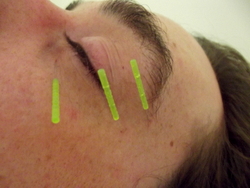
A study undertaken in Milan, Italy shows that acupuncture can accelerate return to consciousness following a general anaesthetic. Fifty patients in recovery were randomly assigned to five groups: acupuncture at one of three point combinations, acupuncture at two sham points, or no acupuncture at all. Signs of recovery appeared faster in patients given true acupuncture compared with those in the sham and no-acupuncture groups. The most effective treatment was a combination of a point on the foot, with a point on the face traditionally considered a “first-aid point” to restore consciousness.

(Acupuncture accelerates recovery after general anesthesia: a prospective randomized controlled trial. Journal of Integrative Medicine, March 2015.)

Acupuncture Stimulates Brain Areas Impaired in Parkinson’s Disease

An international study involving Korea, Europe and the US, has revealed that acupuncture stimulation of the point Yanglingquan near the knee, can activate areas of the brain which are known to be impaired in patients with Parkinson’s disease. In a comparison study, twelve patients (mean age 53) with Parkinson’s disease and twelve otherwise matched, healthy individuals, were needled at Yanglingquan whilst brain activity was observed using an fMRI scanner. The patients with Parkinson’s had their usual medication stopped 12 hours before the investigation.

The results showed that acupuncture stimulation had activated the prefrontal cortex, precentral gyrus and putamen in the patients with Parkinson’s; all these areas are known to be impaired in this disease. Furthermore, the characteristics of the activation were different for the two groups, and the patients with Parkinson’s displayed significantly higher post-acupuncture activity in the prefrontal cortex and precentral gyrus.

(Acupuncture on GB34 activates the precentral gyrus and prefrontal cortex in Parkinson’s disease. BMC Complementary & Alternative Medicine, 15 September 2014. http://www.biomedcentral.com/1472-6882/14/336)

Acupuncture Improves Brain Connectivity in Bell’s Palsy

Acupuncture treatment for Bell's palsy.
Researchers using functional MRI scanning have found that acupuncture induces significant connectivity changes in the brains of patients recovering from Bell’s palsy. Previous studies have demonstrated disruption to connectivity between the somatosensory area and other brain regions.

Brain activity was studied in 20 Bell’s palsy patients (aged 19 to 70), and also in 28 healthy subjects (aged 23 to 54). All were given fMRI scans before and after acupuncture at the point Hegu which is frequently included by acupuncturists treating this condition. Acupuncture was found to significantly increase connectivity in the primary somatosensory area, in patients still recovering from Bell’s palsy. Interestingly, there were no such changes in the already-recovered and in the healthy group. The researchers conclude that their findings may begin to shed light on the underlying mechanisms by which acupuncture treats Bell’s palsy.

(Acupuncture-induced changes in functional connectivity of the primary somatosensory cortex varied with pathological stages of Bell’s palsy. NeuroReport 1 October 2014.)

Acupuncture for Cystitis

Acupuncture research from Norway.
Researchers in Norway have investigated the correlation between choice of acupuncture points and the recurrence rate of cystitis among women prone to the condition and receiving preventative acupuncture treatment. A total of 58 such women were given acupuncture twice per week for four weeks, the treatments being individualised according to a traditional Chinese diagnosis. They were followed up over a six month period.

The most successful combination of acupuncture points was Shenshu on the lower back and Taixi on the ankle. Women for whom these points were used, experienced only one third of the number of symptomatic cystitis attacks over the follow-up period, compared with women for whom these points were not used. Use of the point Shenshu was associated with a significant reduction in residual urine volume, as measured a few days after treatment.

(Acupuncture points used in the prophylaxis against recurrent uncomplicated cystitis, patterns identified and their possible relationship to physiological measurements. Chinese Journal of Integrated Medicine, 9 December 2014, on-line.)