
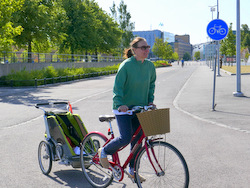
 American researchers have found that morning and evening exercise offer different benefits to men and women. For women, morning exercise reduces both abdominal fat and blood pressure, whilst evening exercise improves muscle performance. In men, evening exercise is preferable if the aim is to reduce blood pressure.
Teams from Skidmore College, NY, and the State Universities of Arizona and California, recruited 30 women and 26 men. All were already exercise-trained, and aged 25 to 55. They were all given a 12 week multi-modal exercise program (resistance, interval, stretching & endurance), and randomised to perform it in either the morning (06.00 to 08.00) or evening (18.30 to 20.30). Participants were given a meal plan with timings, and had access to advice from a dietician. At baseline and week 12, measurements were made of strength, endurance, power, body composition, blood pressure, and dietary intake.
At week 12, 27 women and 20 men completed the study. For women, morning exercise improved lower body peak power, and reduced abdominal fat percentage, total body fat mass, and blood pressure, whilst evening exercise enhanced endurance and upper body strength.
For men, evening exercise increased fat oxidation and the ratio of total cholesterol to HDL cholesterol, whilst reducing systolic blood pressure and fatigue. Men showed no difference in physical performance or body fat variables with time of day. They did show significant improvements in mood state, regardless of time of day.
The research team concludes that clinicians and fitness trainers aiming to more precisely target one outcome over the other, should bear in mind time of day when making physical activity recommendations to patients and clients.
(Morning Exercise Reduces Abdominal Fat and Blood Pressure in Women; Evening Exercise Increases Muscular Performance in Women and Lowers Blood Pressure in Men. Frontiers in Physiology, online 31 May 2022.)


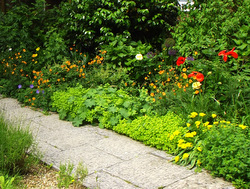 Making your front garden greener, can help you to feel more happy, relaxed, and closer to nature. A four year collaborative project carried out by the universities of Sheffield, Westminster and Virginia, with the Royal Horticultural Society, looked at adding plants to previously bare front gardens in deprived streets of Greater Manchester.
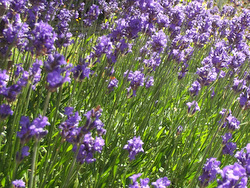
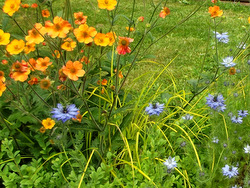 Forty-two residents received a tree, a shrub (azalea), a climber (clematis), lavender, rosemary, spring bulbs, plus enough bedding plants to fill two containers. A second, control group of residents, received the same plants one year later. The researchers tracked residents’ cortisol levels before and after the planting, to use as an indicator of their stress levels.
 Before the experiment, 24% of residents had healthy cortisol patterns. Over the course of the year following the plantings, this increased to 53% of residents. Additionally residents’ perceived stress levels decreased by 6% once the plants had been introduced. More than half (52%) of residents said their front garden contributed to them feeling happier; 40% said it helped them to feel more relaxed and a quarter said it helped them feel closer to nature.
 A study by the University of Technology Sydney, of 139 000 adults aged 45 and over, reveals associations between food groups, memory loss and heart disease. A high consumption of fruit, vegetable and protein-rich foods was found to be associated with lower risk of deteriorating memory. A high consumption of fruit and vegetables was also associated with lower risk of comorbid heart disease. People aged 80 and over, with low cereal consumption, had the highest risk of memory loss and comorbid heart disease compared with people in other age groups.